


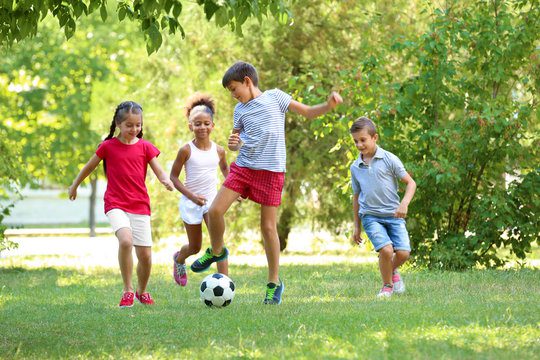
Your child’s focus, creativity, and emotional regulation can all improve with one simple habit: playing outside. New 2026 research shows searches for “outdoor learning” have surged 65%, confirming what neuroscientists have known for years — unstructured time in nature builds the very brain circuits that make kids thrive in school, friendships, and life.
You might also enjoy:
- Risky Play: Why Keeping Kids Safe Is Making Them Fragile
- The Creativity Cliff: Why Kids Peak at 5 (and Bounce Back)
- Is Your Child’s Imagination Atrophying? The Silent Epidemic of Passive Play
But here’s the part that surprises most parents: outdoor play doesn’t just burn energy. It actively constructs your child’s brain. Every time your kid climbs a tree, chases a butterfly, or argues over the rules of a made-up game, they’re wiring up executive function, creativity, language, and resilience — all at once, without a single worksheet.
What 2026 Research Says About Outdoor Play and Your Child’s Brain
Science has been quietly shouting this for years. A 2026 international review of 51 studies across four continents confirmed that play-based learning — especially outdoors — supports cognitive, academic, and social-emotional development in children aged 4 to 12. Four continents. Fifty-one studies. Same conclusion.
Meanwhile, a landmark 2026 paper in PubMed Central found that children’s creativity is directly linked to their social-emotional skills — skills built most powerfully through free, child-led outdoor play. That means when your kid is negotiating who gets to be the dragon today, they’re not just playing. They’re developing the emotional intelligence that unlocks creativity.
Even Camp Invention — the only nationally recognised programme focused on creativity and real-world problem solving — has doubled down on outdoor, hands-on experiences in their 2026 programming, citing nature-based exploration as central to sparking genuine innovation in children.
The 5 Surprising Ways Nature Builds Your Child’s Mind
Some of these might change how you think about “doing nothing” outside.
1. Nature Restores Attention — Fast
Attention Restoration Theory (developed at the University of Michigan) shows that natural environments allow the brain’s directed-attention networks to rest and recover. After just 20 minutes outside, children show measurably better focus. Teachers in forest school programmes consistently report improved classroom concentration after outdoor sessions — not despite the “break,” but because of it.
2. Unstructured Play Grows Executive Function
Executive function — planning, impulse control, flexible thinking — is the single strongest predictor of school success, stronger even than IQ. Outdoors, children constantly practise these skills: deciding what game to play, managing conflict, adapting when it starts raining. Every micro-decision builds the brain’s prefrontal cortex in ways no structured activity can replicate.
3. Physical Movement Accelerates Language Development
Running, climbing, and jumping aren’t just physical — they literally grow the brain. Movement triggers the release of BDNF (brain-derived neurotrophic factor), which neuroscientists call “Miracle-Gro for the brain.” Increased BDNF means faster neural connections, better memory, and stronger language acquisition. That’s why children who play actively outside often develop richer vocabularies than their less-active peers.
4. Natural Settings Spark Divergent Thinking
A stick can be a magic wand, a sword, a thermometer, or a measuring tool. Natural settings offer objects with no fixed purpose — and that ambiguity is pure gold for developing divergent thinking (the ability to generate many different ideas from one starting point). Research highlighted in ScienceDirect’s creativity trajectories study confirms that creativity flourishes in open-ended, context-rich environments. The park is exactly that.
5. Outdoor Play Builds Emotional Intelligence
Managing the social complexity of outdoor play — “Can I join your game?” “That’s not fair!” “What if we changed the rule?” — is a masterclass in emotional intelligence. Children navigate real stakes, real feelings, and real consequences, without a screen buffering them from the experience. Those skills show up later as empathy, resilience, and the ability to genuinely work with others.
How Outdoor Adventures Fuel Your Child’s Imagination — and Storytelling
Here’s what no worksheet can give your child: raw material for stories.
When a child spends an afternoon building a dam in a muddy stream, they come home with a lived experience — complete with a problem, a solution, characters, and stakes. That afternoon is a story. Parents who tap into it — asking “What happened next? Who was the hero? What did the villain do?” — are building narrative intelligence without either party noticing.
Outdoor play consistently generates the richest creative content. Give a child who just climbed a big tree an open-ended prompt (“You found a secret door at the top — what was inside?”) and watch what pours out. Compare that to the same child after 45 minutes of passive indoor time, and the difference is startling.
Storytelling apps like StoryQuest work best when children arrive with heads full of adventure. Honestly? Try ten minutes outside before a StoryQuest session tonight. You’ll barely get a word in — their imaginations will already be racing.
Getting More Outdoor Time Without the Battle
Most parents already know outdoor play is good. The sticking point is getting there — especially after school when everyone is tired and homework looms. These small shifts make a real difference:
- The “20 before” rule: 20 minutes outside before any screen time or structured homework. Attention restoration research shows they’ll actually focus better on their work afterwards.
- Mission-based outdoor time: Give kids a micro-mission — find three different-coloured leaves, build something that can float, count how many different birds you hear. Purpose transforms “go outside” from boring to irresistible.
- Story seeds: Before they go out, whisper a prompt: “Today you’re explorers looking for the entrance to an underground kingdom.” Ask about it at dinner. This links outdoor adventure directly to narrative — and primes incredible StoryQuest sessions later.
- Weather is not the enemy: Outdoor learning research is consistent — children who play in all weather develop better adaptability and have fewer sick days. Waterproof suits exist. Mud washes off. Stories about rainy-day adventures? Priceless.
Frequently Asked Questions About Outdoor Play and Child Development
How much outdoor time does my child actually need each day?
The WHO recommends at least 60 minutes of moderate-to-vigorous physical activity daily for children aged 5–17. For younger children under 5, they suggest at least 3 hours of physical activity spread throughout the day. Even 20–30 minutes of unstructured outdoor play has measurable cognitive benefits, so any outdoor time is better than none.
Does outdoor play really improve academic performance?
Yes — consistently. The 2026 international review of 51 play-based learning studies found that outdoor and play-based learning supports academic outcomes alongside social and cognitive ones. Children in forest school programmes show improved concentration, problem-solving, and communication in the classroom. Outdoor time isn’t a break from learning — it’s a different and powerfully effective mode of it.
What types of outdoor play are most beneficial for brain development?
Unstructured, child-led play is most powerful. That means no adult-set rules, no goals, no score. Children invent the games, negotiate the rules, and solve the problems themselves. Physical play (running, climbing, jumping) combined with imaginative play (making up stories, building things) is the golden combination — and it’s also what research finds produces the most measurable cognitive gains.
How does outdoor play connect to creativity and storytelling specifically?
Natural environments provide what researchers call “loose parts” — sticks, stones, puddles, leaves — that children use as open-ended props for imaginative play. This kind of object-based improvisation is a direct rehearsal for storytelling: characters, settings, problems, and solutions all emerge naturally. Children who play outdoors regularly tend to generate richer, more original story ideas and have larger narrative vocabularies than peers who don’t.
My child prefers to stay inside — how do I make outdoor time appealing?
The magic word is “mission.” Children who are given a purpose engage far more readily than those told to “go play outside.” Bring one StoryQuest character to life outdoors — “What do you think Zara the Explorer would find here?” — and suddenly the back garden becomes an adventure. Honestly? Try it tonight. One session is usually all it takes.
The Bottom Line on Outdoor Play and Child Development
Outdoor play is not a luxury or a reward for finishing homework. It is the curriculum. Every hour your child spends outside — running, building, imagining, negotiating — is an hour of genuine brain development that no app, worksheet, or structured class can replicate.
Children who play outside regularly come home with full imaginations, restored attention, and story ideas tumbling out of them. That’s the perfect state for a StoryQuest session, a good book, or just a great conversation over dinner.
Tonight, try the 20-before rule. Twenty minutes outside before anything else. Watch what happens to their focus, their mood — and their stories.








Leave a comment