
My Kid Won’t Nap: The Secret to 20 Minutes of Silence
Key Takeaways
- The “Nap Strike” Solution: How to rest without the battle.
- Boredom is Good: Science says doing “nothing” sparks creativity.
- Visual Anchors: Keep their hands busy so their ears can listen.
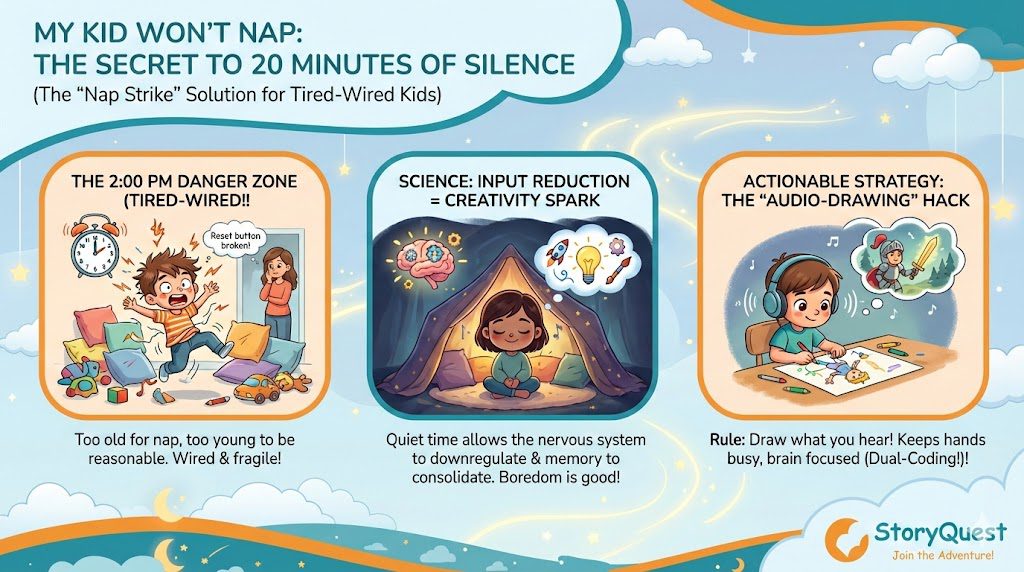
The 2:00 PM Danger Zone
There is a specific time of day—usually around 2:00 PM—where your child is too old for a nap but too young to be reasonable. They are wide-eyed, wired, and emotionally fragile. You suggest a nap; they act like you suggested a prison sentence. You need a reset button, but the button is broken.
The result? A “tired-wired” kid who bounces off the walls until bedtime.
The Science: The Power of “Input Reduction”
We often feel guilty when our kids are bored, but research suggests that downtime is essential for memory consolidation. When the brain isn’t processing new visual information (screens, bright toys), it switches to the Default Mode Network (DMN). This is where creativity and problem-solving happen.
According to Psychology Today, “quiet time” (distinct from sleep) allows the nervous system to downregulate. It’s not just rest; it’s a neurological necessity for processing the day’s events.
- Once they are rested, get them moving again with Active games for high-energy kids.
- If quiet time is leading to bedtime struggles, see our Bedtime Routine Hacks.
Why it works for every kid
- For the “Tornado” (High-Energy): It teaches them to lower their idle speed without forcing them to sleep (which feels like a punishment).
- For the “Observer” (Quiet): It gives them permission to retreat into their own world without social pressure or the need to “perform.”
Actionable Strategy: The “Audio-Drawing” Hack
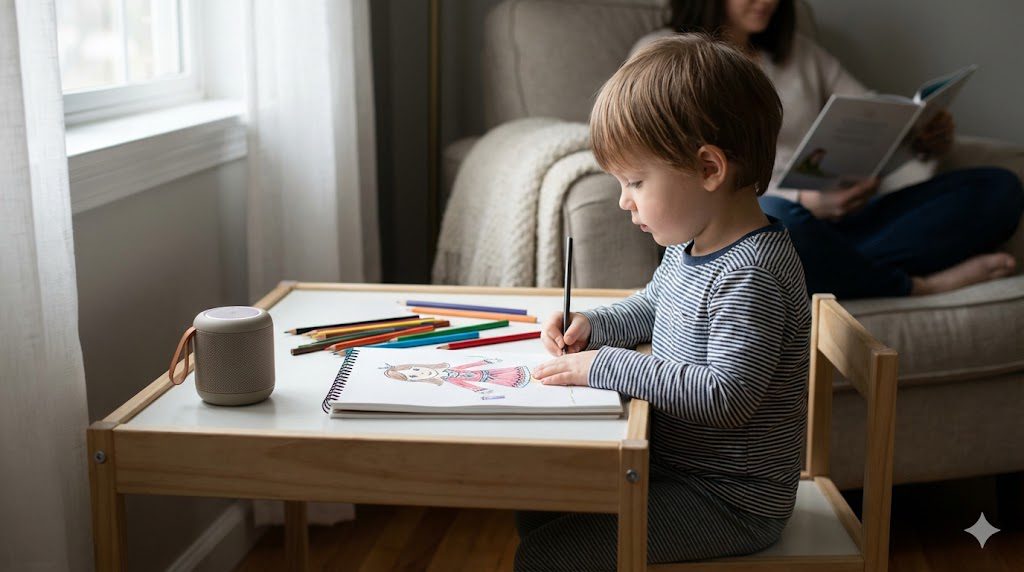
Put on an audio story (or a StoryQuest adventure), but add a Visual Anchor.
- The Rule: “You don’t have to sleep, but you have to draw exactly what the main character is wearing.”
- Why it works: It keeps their hands busy (preventing fidgeting) while their brain focuses on the narrative. This is called “dual-coding,” and it actually helps them retain the story better.
The StoryQuest Solution
StoryQuest isn’t just for running around. Our “Chill Mode” stories are designed to bring the heart rate down. We provide the narrative and the soft soundscapes; your kid provides the imagination. It’s the perfect bridge between chaos and calm.
FAQ (People Also Ask)
A: Use a “Quiet Time Box” with special toys (Legos, puzzles) that only come out during this hour. It makes the time feel special, not restrictive.
Q: At what age should I stop nap time?
A: Most children drop their nap between ages 3 and 5, but they still need 30-60 minutes of “quiet time” to recharge.
Q: How long should quiet time be?
A: Aim for 20-45 minutes. Start with 10 minutes and slowly increase the duration as they get used to independent play.
Q: What if my child refuses to stay in their room?
A: Use a “Quiet Time Box” with special toys (Legos, puzzles) that only come out during this hour. It makes the time feel special, not restrictive.