
Bedtime Routine Hacks (For Parents Who Just Want to Sleep
Key Takeaways
- Consistency is King: A predictable routine actually improves behavior and cognitive performance (seriously).
- The “Curtain Call”: Solve the “one more thing” demands before they start with the “Bedtime Ticket.”
- Visual Cues: Let the chart be the boss, not you.
The “I’m Thirsty” Encore
Ah, bedtime. That magical time of day when your child suddenly becomes a philosopher, a hydration expert, and a person who desperately needs to tell you about a bug they saw three weeks ago. It’s not just stalling; it’s FOMO (Fear Of Missing Out). But you? You just want to watch Netflix in silence and eat the snacks you hid in the pantry.
If your evenings feel less like a “wind down” and more like a hostage negotiation, it’s time to change the rules of engagement.
The Science (Simplified): Boring is Better
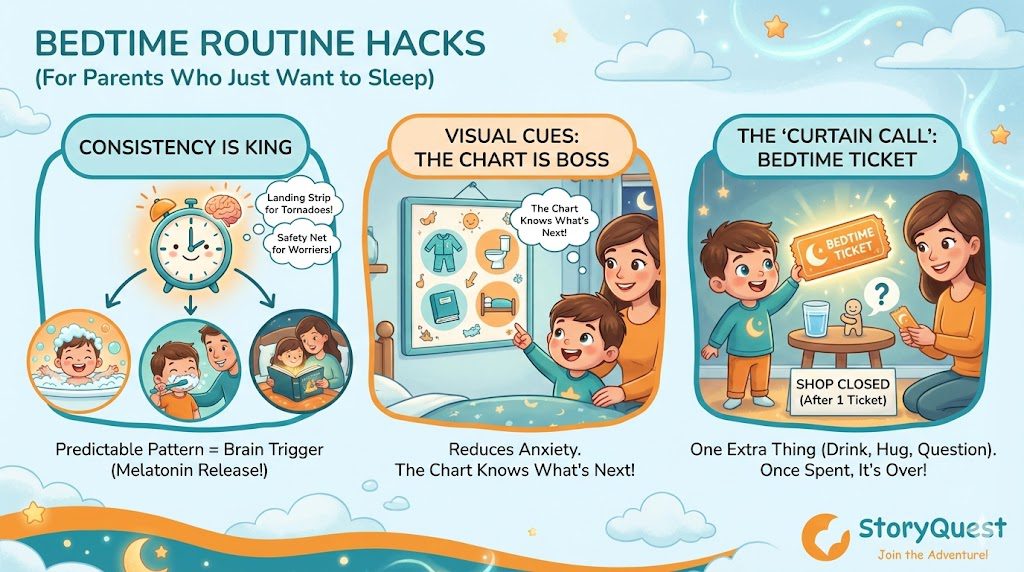
According to the Sleep Foundation, a consistent bedtime routine is one of the strongest predictors of good sleep outcomes and even cognitive performance. The brain loves patterns. When you do the same 3 steps every night (Bath -> Brush -> Story), you are Pavlov-ing your child’s brain into releasing melatonin.
You aren’t just “putting them to bed”; you are programming a biological trigger.
- If the energy is still too high at 7 PM, you might need to burn more fuel earlier in the day. Check out Active games for high-energy kids.
- Is the transition the problem? Learn how Quiet-time stories that actually work can help regulate their system before the sun goes down.
It works both for high-energy and for anxious kids
- For the “Tornado” (High-Energy): A routine provides a “landing strip” to decelerate from 100 mph to zero. They physically cannot stop abruptly; they need a slope.
- For the “Worrier” (Anxious): Predictability reduces anxiety. When they know exactly what comes next, they feel safe, which lowers cortisol and invites sleep.
Actionable Strategy: The “Bedtime Ticket”
This is the nuclear option for the “Curtain Call” (the constant popping out of bed).
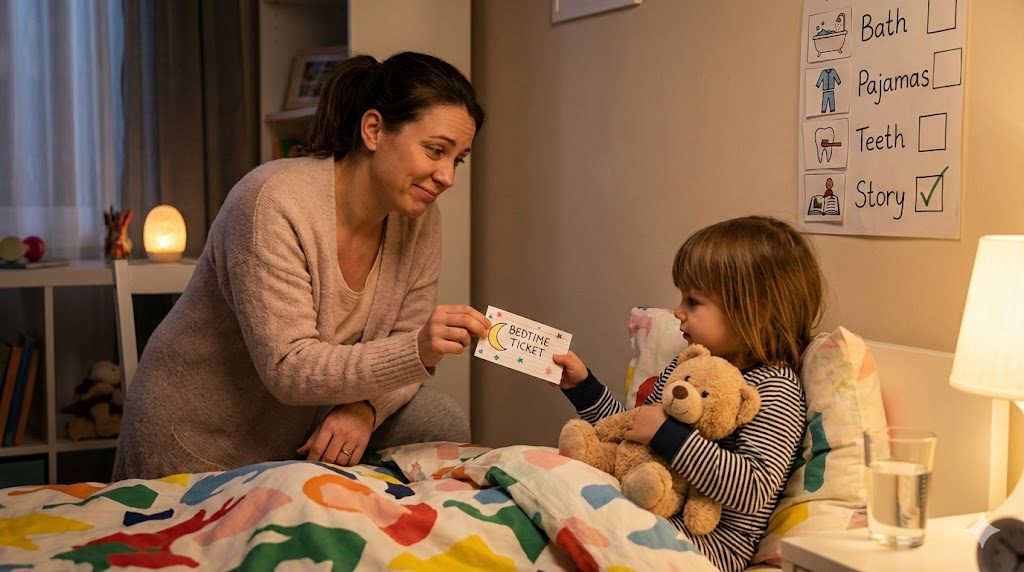
- The Setup: Give your child one physical “Bedtime Ticket” (a playing card or a sticky note) at the start of the routine.
- The Rule: They can turn this ticket in for one extra thing (one drink, one hug, one question, one bathroom trip).
- The Catch: Once the ticket is spent, the “shop” is closed. No exceptions.
Why it works: It gives them control (which they crave) but sets a hard limit (which you need). Most kids will actually save the ticket and fall asleep holding it, just in case they need it later.
The StoryQuest Solution
End the routine with a StoryQuest tale. Because our stories are audio-guided, they allow you to turn the lights out while the story is still going. It bridges the gap between “awake” and “asleep” with a narrative that slowly winds down, helping them drift off without the battle. You press play, they close their eyes, and you get your evening back.
FAQ (People Also Ask)
- Q: How long should a bedtime routine be?
- A: Aim for 30-45 minutes. Any longer and it becomes a play session; any shorter and the brain doesn’t have time to register the “sleep signals.”
- Q: What if my child gets out of bed repeatedly?
- A: Rapid return. Don’t engage, don’t argue, don’t lecture. Just calmly guide them back to bed. Boredom is your friend here.
- Q: Should I use screens before bed?
- A: Ideally, no. Blue light suppresses melatonin. This is why audio stories are superior to cartoons for the final hour of the day.